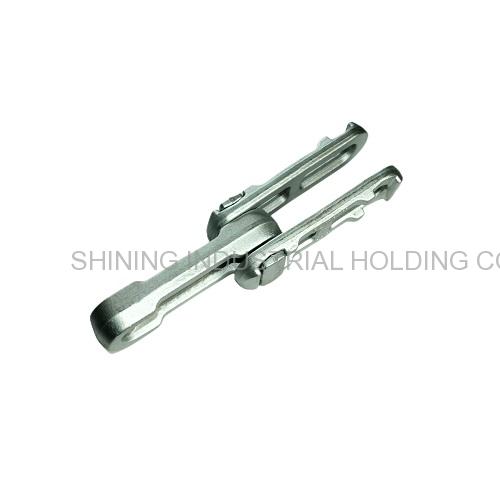


Forged Chain Ultimate Guide
 Feb 24, 2026|
 View:1043
For over two decades, SHINING has been a cornerstone of the global conveyor chain industry, engineering robust solutions that keep the world's most critical industries in motion. Among our core specialties, Forged Chain stands out as the workhorse for applications where failure is not an option. This comprehensive guide delves into everything you need to know about Forged Chain—from its inherent advantages and sophisticated manufacturing to proper selection, maintenance, and real-world failure analysis—empowering you to make informed decisions for your heaviest-duty operations.
Chapter 1: Understanding Forged Chain and Its Superior Advantages
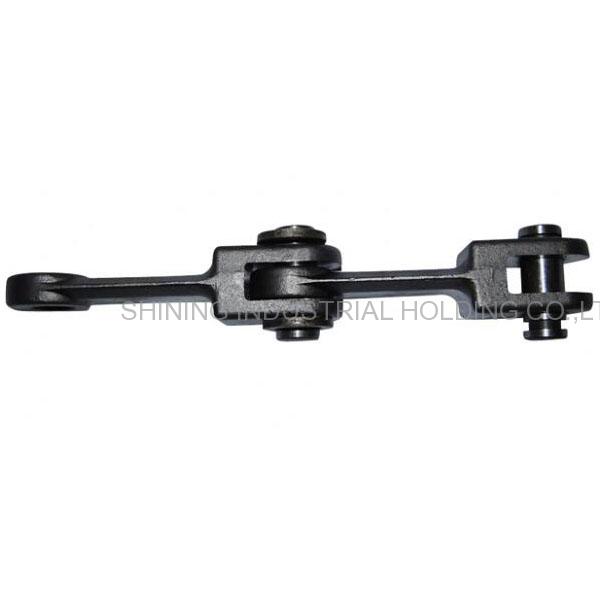
A Forged Chain is manufactured through the forging process, where high-quality alloy steel is shaped under immense pressure. This method aligns and refines the metal's grain structure, unlike casting which can introduce voids and inconsistencies. The result is a chain component with exceptional density and integrity.
Why SHINING Forged Chain is the Premier Choice:
Unmatched Strength & Durability: The forged microstructure delivers superior tensile strength, impact resistance, and fatigue life compared to cast or standard welded alternatives. This translates directly to longer service intervals and reduced total cost of ownership in punishing environments like Cement, Mining, and Steel Mills.
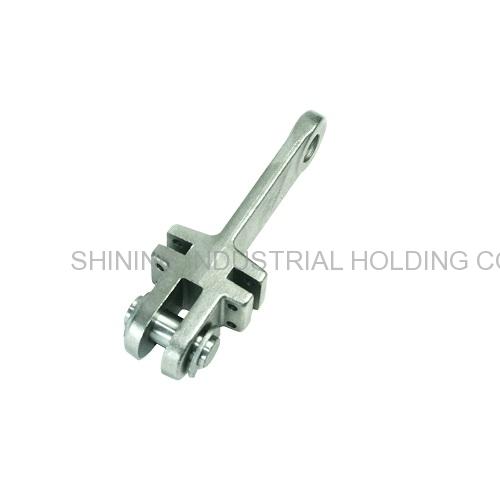
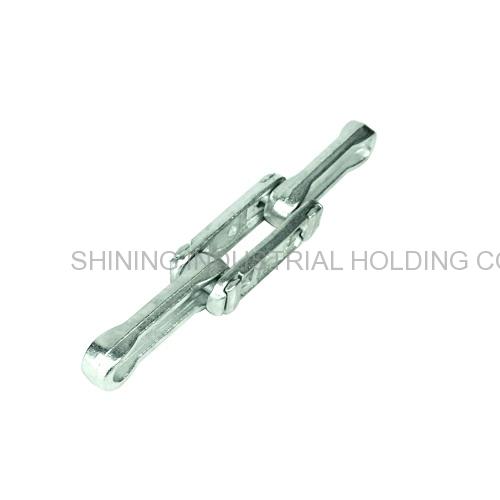
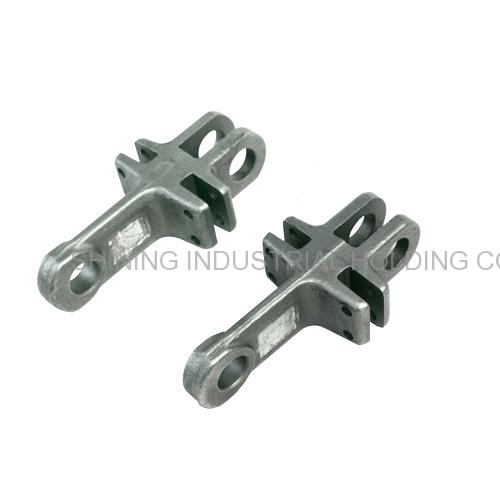
Comprehensive Product Portfolio: We offer an extensive range, covering standard series from 142N-A to 250D-A2, as well as specialized models like trolley X678 for unique conveying needs. Unique solutions like Double Strand configurations are engineered for efficient handling of sticky materials, ensuring complete discharge.
OEM-Grade Customization: As a trusted partner to leading global brands, we don't just sell chains; we provide solutions. Flights (scrapers) are manufactured and attached precisely to your specifications, with multiple attachment styles (A, B, C, U, OO-type) for horizontal, inclined, or vertical conveying.
Global Benchmark Quality: Our chains mirror the technical specifications, material grades, and heat-treatment standards of top-tier international competitors. We achieve this benchmark while offering competitive pricing without compromise, delivering exceptional value.
Cross-Industry Expertise: Our engineers possess deep sector-specific knowledge, allowing us to optimize chain performance for the unique challenges of Automotive Manufacturing, Pulp & Paper, Sugar & Palm Oil, and Energy & Wastewater treatment.
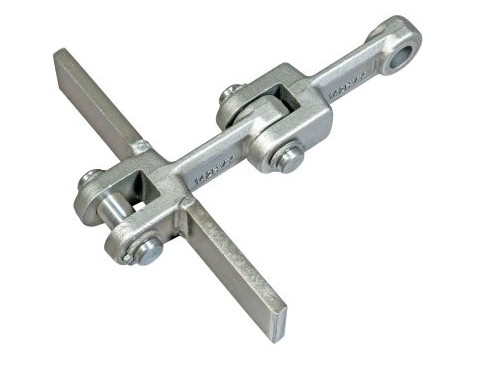
Chapter 2: The Science Behind the Strength: Materials, Process, and Heat Treatment
The legendary performance of SHINING Forged Chain is engineered at every stage.
1. Premium Material Selection:
We start with high-grade alloy steels. For critical components like pins and bushings subjected to severe wear or corrosion, we offer hardened stainless steel options. Furthermore, we provide Ultra-High Molecular Weight Polyethylene (UHMW-PE) or other high-impact engineering plastics for flights, combining extreme abrasion resistance with reduced weight and noise.
2. The Forging Advantage:
Forging eliminates the porosity and shrinkage defects common in castings. The controlled plastic deformation creates a continuous grain flow that follows the contour of the part, significantly enhancing its load-bearing capacity and toughness, particularly under shock loads.
3. Precision Heat Treatment:
This is where the base material's potential is fully unlocked. SHINING employs advanced thermal processes like carburizing, quenching, and tempering. The goal is to create a perfect balance: a exceptionally hard, wear-resistant surface case surrounding a tough, ductile core that can absorb impact.
Supporting Evidence from Material Science:
A recent analysis report (Document No.: 2025-03036) on chain working surfaces provides concrete data. For a chain made from 16MnCr5 steel (compliant with EN 10084-1998), the confirmed heat treatment process was Carburizing + Quenching + Low-Temperature Tempering. The report measured a carburized case depth of 0.60-0.87 mm and a core microstructure of tough lath martensite and ferrite bands. This validated process creates the essential hardness gradient, with a defined "case depth" (e.g., 0.54-0.72 mm at the 550 HV1.0 threshold) that ensures wear resistance while maintaining core resilience.
Chapter 3: Key Application Sectors
SHINING Forged Chains are indispensable in industries defined by heavy loads, abrasive materials, and continuous operation:
Cement Production: Conveying clinker, raw meal, and limestone.
Mining & Quarrying: Handling ores, aggregates, and overburden.
Steel Mills: Moving sinter, pellets, and slag.
Automotive Manufacturing: Heavy-duty transfer lines and paint shops.
Construction: Aggregates and concrete component handling.
Energy & Wastewater: Ash handling and sludge conveyance.
Sugar & Palm Oil: Transporting bagasse, nuts, and fibrous waste.
Lumber, Pulp & Paper: Moving logs, chips, and recycled material.
Grain & Milling: Handling bulk grains and by-products.
Chapter 4: How to Select the Right Forged Chain
Selecting the optimal chain is a systematic process:
Analyze Application Parameters: Define the conveyed material (weight, abrasiveness, moisture), capacity (tonnage/hour), speed, layout (inclination, length), and environmental conditions (temperature, humidity, exposure to chemicals).
Consult Technical Specifications: Match your requirements to the chain's rated capacity. Critical parameters from our product manuals include:
Chain Number/Series: Identifies the product family and size (e.g., X458, X678).
Pitch (P): The distance between pin centers, affecting smoothness and size.
Average Tensile Strength / Breaking Load: The fundamental strength ratings. The working load must be significantly lower, with an appropriate safety factor.
Weight per Meter: Crucial for calculating drive power requirements.
Attachment Type: Select the style (A, B, C, etc.) compatible with your flight design and mounting needs.
For an Accurate Quote: Provide Flight (Scraper) Dimensions
Since flights are custom-made, providing detailed scraper drawings and dimensions is essential for us to design the correct attachment links and provide a precise, fit-for-purpose solution.
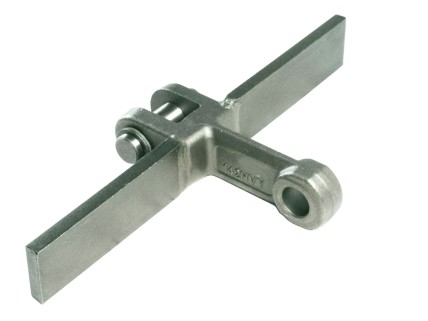
Chapter 5: Case Study: Analysis of a Premature Forged Chain Failure
Scenario: A forged chain in a biomass fuel conveyor application in a cement plant, began experiencing unexpected failures well before its projected service life. Links were fracturing, causing unplanned downtime and production losses.
Investigation & Findings:
Visual & Dimensional Inspection: Fracture surfaces indicated fatigue failure, characterized by smooth propagation zones and final fast fracture areas. Measurements also showed accelerated wear on pin and bushing surfaces.
Root Cause Analysis (Informed by Technical Data): While the chain's material (16MnCr5) and base heat treatment (carburizing) were appropriate, the failure analysis pointed to two synergistic issues:
Microstructural Vulnerability: The specific heat treatment cycle resulted in a less-than-ideal carburized layer. As seen in analytical reports, conditions can sometimes produce a coarse martensitic structure with mixed grain size (e.g., a very coarse Grade 1 surface grain). This microstructure, while hard, has reduced fatigue resistance and toughness, making it more susceptible to crack initiation under cyclic loading.
Operational Overload: Concurrently, the system was experiencing intermittent shock loading beyond design parameters, often due to oversized material lumps or feeder issues. This high cyclic stress, acting on a microstructure with compromised fatigue strength, led to the initiation and propagation of cracks.
SHINING Recommended Solution:
Process Optimization: We revised the heat treatment parameters for the replacement chains. The goal was to refine the carburized layer to achieve a target of ≥650 HV surface hardness, a controlled effective case depth of 0.7-0.9 mm (at 550 HV1.0), and a consistent, finer grain structure to dramatically enhance fatigue performance.
Application Review: We worked with the plant engineers to review feed control to mitigate shock loads.
Material Upgrade: For the highest-wear components (pins/bushings), we recommended a switch to hardened alloy steel to combat the combined abrasive and corrosive environment.
Outcome: The optimized forged chains, paired with minor process adjustments, exceeded the original service life, eliminating the premature failures and restoring reliable operation.
Chapter 6: Failure Mode Analysis and Proactive Maintenance
Understanding how chains fail informs how to prevent it.
Common Failure Modes:
Abrasive Wear: The gradual removal of material from pins, bushings, and sidebars by conveyed grit. It is the most common wear mode and is accelerated by poor lubrication.
Fatigue Fracture: Caused by repeated stress cycles below the tensile strength, leading to crack growth and breakage. Often originates from stress concentrators (sharp corners, material defects) or unsuitable microstructure.
Overload (Tensile) Failure: A single load event exceeding the chain's breaking strength, resulting in ductile rupture.
Corrosion: Chemical attack that thins cross-sections and creates pitting, which can act as fatigue crack starters.
Impact Failure: Brittle fracture due to a severe shock load.
Proactive Maintenance Best Practices:
Establish a Lubrication Regime: Regular, proper lubrication is the single most effective maintenance task. It reduces friction, wear, and corrosion. Use the correct lubricant type and apply it to the critical internal interfaces between pin and bushing.
Implement Scheduled Inspections: Regularly check for:
Chain Elongation: Measure pitch over several links. Excessive elongation (typically >3% of original pitch) indicates wear and signals the need for replacement.
Cracks or Deformation: Visually inspect links, especially in high-stress areas.
Corrosion: Look for rust, particularly in pits or crevices.
Retaining Components: Ensure cotters, circlips, or lock wires are secure.
Ensure Proper Alignment: Misalignment of sprockets and tracks causes uneven loading, accelerated wear, and can induce fatigue.
Maintain Correct Tension: Chains should be tight enough to prevent "whipping" and derailment, but not so tight as to create excessive load and wear. Follow manufacturer guidelines.
Keep it Clean: Where possible, prevent the buildup of abrasive materials around the chain and sprockets.
Conclusion
Choosing a Forged Chain is an investment in the reliability and productivity of your operation. By selecting SHINING, you partner with an expert who masters the entire value chain—from metallurgy and precision forging to application engineering and lifecycle support. Our commitment to Global Benchmark Quality ensures you receive a product engineered to endure, backed by the expertise to help you optimize its performance.
Ready to forge a path to greater reliability? Contact SHINING today with your application details and flight specifications for a tailored solution and a competitive quote.