


What are the benefits of welded link chain?
 Feb 25, 2022|
 View:5390
What Are the Benefits of Welded Link Chain?
- An In-Depth Guide by SHINING
Introduction
In the demanding world of industrial lifting and material handling, the integrity of every component is paramount. Among the various types of chains available, the Welded Link Chain stands out for its robust, reliable, and enduring construction. Distinguished from other welded chains by its specific manufacturing process and application, it is engineered for scenarios where safety, strength, and durability are non-negotiable. For over two decades, SHINING has specialized in the design and manufacture of these critical components, serving industries worldwide where failure is not an option. This article provides a deep dive into the unique benefits of Welded Link Chains, exploring their materials, performance, ideal use cases, and how they compare to standard lifting chains, culminating in a guide for selection and care.
1. Defining Welded Link Chain: Material and Manufacturing Excellence
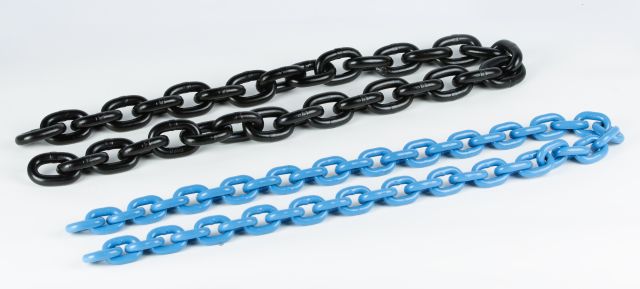
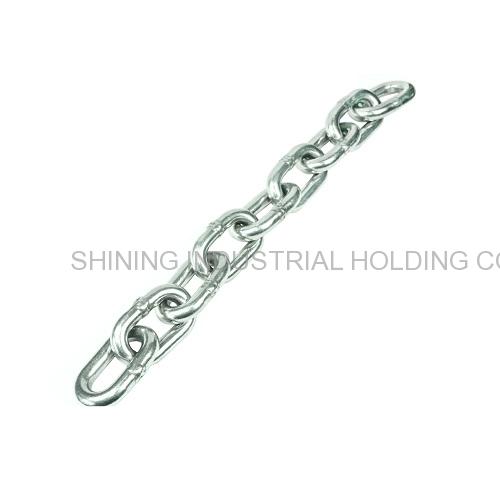
A Welded Link Chain refers specifically to a type of chain where each individual round steel link is formed, fitted into the previous link, and then permanently welded at the closure point. This link-by-link welding creates a continuous, homogenous assembly. After welding, the entire chain undergoes a critical stretching and straightening (calibration) process to ensure uniform pitch, remove residual stresses, and achieve precise dimensional tolerances.
1.1 Material Science: The Foundation
The performance of a Welded Link Chain begins with its metallurgy. SHINING utilizes high-grade alloy steels, such as 20Mn2, 23MnNiMoCr54, or similar grades, which are specifically chosen for their:
High Tensile Strength: To withstand immense pulling forces.
Excellent Toughness: To absorb impact and shock loads without fracturing.
Superior Weldability: To ensure the weld joint's integrity matches that of the parent metal.
1.2 The Precision Manufacturing Process
Wire Rod Coiling & Cutting: High-quality alloy steel wire rod is coiled and cut to precise lengths for each link.
Link Forming: Each piece is bent into a precise round link shape.
Assembly & Interlinking: Links are manually or automatically assembled, with each new link passed through the previous one.
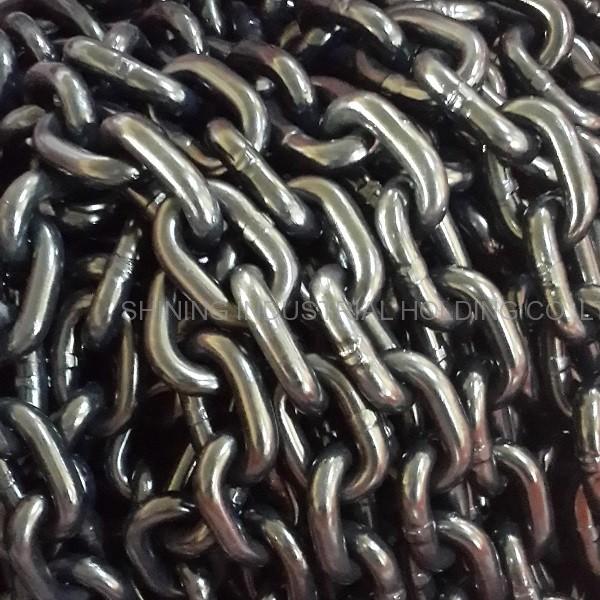
Flash Butt Welding: The open ends of each link are brought together and welded using a precise, high-temperature flash butt welding process. This creates a forged-quality weld where the material is fused seamlessly.
Heat Treatment (Quenching & Tempering): The entire chain is heat-treated to achieve the desired mechanical properties—high surface hardness for wear resistance and a tough core to prevent brittle failure.
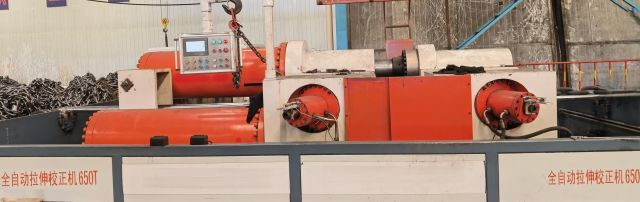
Stretching & Straightening (Calibration): This is a defining step. The chain is passed through a specialized Automatic Stretching and Straightening Machine (e.g., a 650-ton capacity machine) under controlled tension. This process:
- Aligns Links: Eliminates twist and ensures all links lie flat in the same plane.
- Sets Pitch: Uniformly stretches the chain to achieve a consistent, precise pitch (center-to-center distance between links).
- Relieves Stress: Removes internal stresses from welding and heat treatment, enhancing fatigue life.
- Tests Integrity: Serves as a preliminary proof load, revealing any weak links.
Surface Finishing & Coating: Chains are often shot-blasted for cleaning and then coated. A standard Blue Polyester Powder Coat or Hot-Dip Galvanizing provides corrosion protection. For high-visibility safety applications, Orange Coatings are available.
2. Performance Advantages: The Core Benefits
This meticulous process yields a chain with exceptional characteristics:
Unmatched Strength & Integrity: The welded closure eliminates the weak point found in mechanically closed links. The load is carried by the solid, continuous material of the link, not by a pin or press-fit. This results in a higher Working Load Limit (WLL) and Break Load for a given diameter compared to some non-welded alternatives.
Superior Durability & Wear Resistance: The heat-treated surface provides excellent resistance to abrasion. The calibration process ensures smooth interaction between links and with sheaves/chain wheels, reducing internal wear.
Exceptional Fatigue Life: The stress-relieving effect of stretching and the homogeneous structure of the welded link make these chains highly resistant to failure from repeated bending and loading cycles, which is critical in applications like balers, hoists, and draglines.
Consistent, Predictable Performance: Calibration guarantees uniform dimensions. This means consistent engagement with sprockets, smooth operation, and reliable performance batch after batch.
Enhanced Safety: The permanent welded closure offers inherent security; it cannot "unhook" or come apart accidentally under load. When manufactured to lifting grades (like G80 or G100), they provide a dependable, high-integrity connection.
3. Key Applications: Where Welded Link Chains Shine
Welded Link Chains are the preferred choice in applications demanding brute strength, durability, and reliability over slick, high-speed operation.
Lifting & Hoisting: As the core component in Grade 80 (G80) and Grade 100 (G100) chain slings for overhead lifting. Their strength and safety are paramount.
Towing & Dragline Applications: In dredging, mining, and forestry for dragging heavy loads. Their toughness withstands shock loads and abrasive ground conditions.
Tie-Down & Securing: For securing heavy cargo on trucks, railcars, and ships. Their strength and lack of moving parts make them reliable under tension and vibration.
Agricultural & Industrial Machinery: In balers, combines, and conveyors where heavy loads, debris, and shock are common.
Marine & Offshore: For mooring, anchoring, and deck applications, especially when hot-dip galvanized for corrosion resistance.
4. Welded Link Chain vs. Standard Lifting Chain: Clarifying the Relationship
This is a crucial distinction. The terms are often used interchangeably, but they describe different aspects:
Welded Link Chain: Describes the manufacturing method and physical construction (round links, individually welded and calibrated).
Lifting Chain (e.g., G80, G100): Describes the application, performance grade, and certification standard. A lifting chain is a typeof chain designed foroverhead lifting.
The Overlap: A high-performance Lifting Chain (like SHINING's G100 series) is almost always a Welded Link Chain. However, not all Welded Link Chains are certified for lifting. Lifting chains must adhere to strict international standards (like ISO 3075 or EN 818), which govern material, manufacturing, heat treatment, testing (proof load, break load), marking, and periodic inspection.
Key Comparison:
Aspect | General Welded Link Chain | Certified Lifting Chain (e.g., G100) |
Standard | May be made to general industrial specs. | Must comply with ISO 3075, EN 818, ASME B30.9 |
Testing | Typically batch tested for breaking strength. | Each chain is proof-loaded (2.5 x WLL) and break-tested. Certified with traceability. |
Marking | May have manufacturer mark. | Mandatory marking: Grade (e80, T(8), or G100), manufacturer ID, size, lot number. |
Primary Use | Towing, securing, general power transmission. | Overhead lifting of personnel and loads. |
Safety Factor | Varies by application. | Strict minimum safety factor (typically 4:1). |
5. How to Select the Right Welded Link Chain
Determine the Application & Load: Identify if it's for lifting (requires certified grade), towing, or securing. Calculate the maximum static and dynamic loads (Working Load Limit required).
Choose the Correct Grade & Standard:
- For Lifting: Select a certified grade (G80/ISO 3075 T(8) for general use, G100/ISO 3075 T(10) for higher strength and better wear resistance). Ensure it comes with a test certificate.
- For Non-Lifting: Specify the required minimum breaking force and material (e.g., Alloy Steel, Grade 70).
Specify Size & Coating: Select the chain diameter (e.g., 10mm, 13mm, 16mm) based on WLL. Choose the coating: Self-color (oil-finished), Galvanized (corrosive environments), or Powder Coated (general protection + color coding).
Consider Accessories: Ensure end fittings (hooks, shackles, master links) are of compatible grade and rating. Never mix components of different grades or unknown origin.
6. Inspection, Maintenance, and Best Practices
Regular Inspection: Before each use, inspect for wear (measure link diameter; >10% reduction is discard criterion), stretch (measure a 1-meter section; >2-3% elongation is discard), cracks (especially at weld points), deformation, and corrosion.
Proper Cleaning & Lubrication: Clean off abrasive grit. Use a suitable lubricant to minimize internal wear, especially in high-cycle applications.
Correct Storage: Store off the ground in a dry, clean place to prevent corrosion and physical damage.
Never Modify or Repair: A welded link chain must never be thermally cut, re-welded, or mechanically modified in the field. This voids any certification and dangerously compromises its integrity.
Adhere to Certification: For lifting chains, follow the mandated periodic thorough inspection by a competent person (e.g., annually).
7. SHINING's Commitment to Quality in Welded Link Chains
SHINING's vertical integration and OEM expertise ensure every meter of Welded Link Chain meets the highest standards. Our process, from alloy selection to final calibration in our 650-ton stretching machines, is controlled to deliver:
Traceability: Full material and heat-treatment lot traceability.
Certification: Lifting chains come with full ISO 3075 / EN 818 certification packages.
Customization: Available in various grades, sizes, and finishes (including high-visibility orange for safety).
Global Support: Backed by over 20 years of experience serving cement, mining, steel, and logistics sectors worldwide.
Conclusion
The Welded Link Chain represents a fusion of traditional blacksmith strength with modern metallurgical and manufacturing precision. Its benefits—unmatched strength from its welded-and-calibrated construction, exceptional durability, and inherent safety—make it the backbone of heavy-duty lifting, securing, and dragging operations. Understanding its specific nature, how it forms the basis of certified lifting chains, and following proper selection and maintenance protocols are key to leveraging its full potential safely and efficiently. For mission-critical applications, trust engineered solutions from partners like SHINING, where quality is forged into every link.
For complete technical specifications, custom quotes, or technical support for your industrial applications, contact our sales team at sales@shiningco.com. Provide your project requirements for customized solution development.

Recommended Products
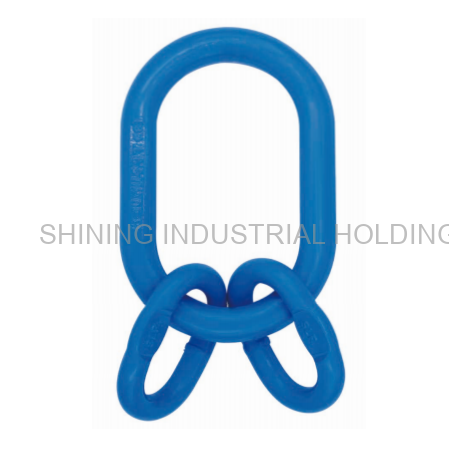
G100 Master Link Assembly
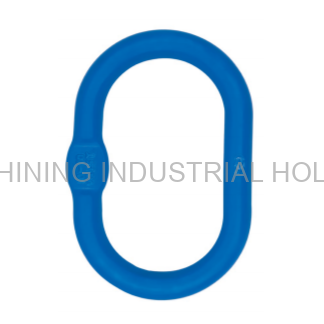
G100 Master Link
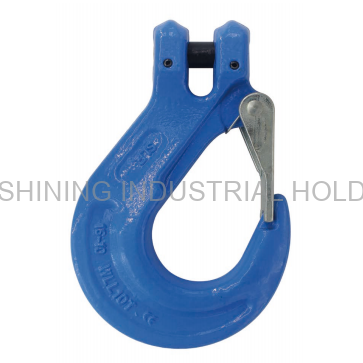
G100 Clevis Sling Hook with Cast Latch

High Strength Forged G100 Connecting Link

G100- 22x66mm Alloy Steel Round Link Chain- Ultimate Capacity

G100- 18x54mm Alloy Steel Round Link Chain - Heavy-Duty Performance

G100- 16x48mm Alloy Steel Round Link Chain- Maximum Capacity for Critical Lifts

G100- 13x39mm Alloy Steel Round Link Chain- Superior Strength & Durability
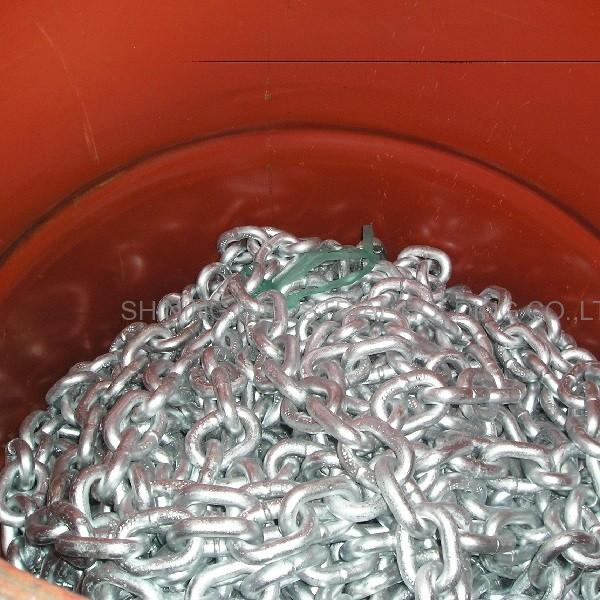
Grade 43 chain, 3/8 inch, galvanized link chain
P68 310S stainless steel link chain


