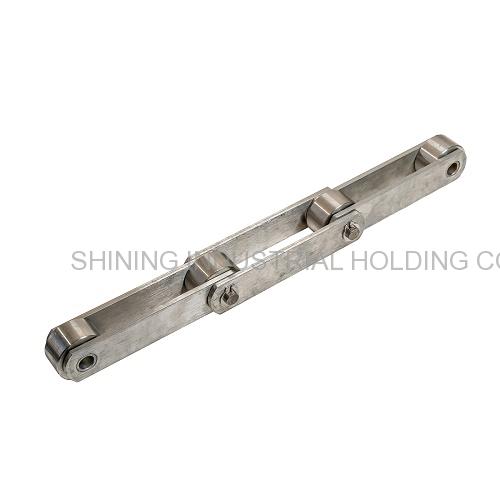


Metric chain metric roller chain
 Sep 04, 2026|
 View:2400

What Are Metric Chains?
Metric chains are roller chains or bushing chains designed and manufactured using the metric system of measurement. They are widely used in power transmission and conveyor applications across global industries, particularly in regions that adopt the metric system. Unlike inch-based chains, metric chains are dimensioned in millimeters (mm), with all critical parameters — pitch, roller diameter, pin diameter, and inner width — specified in metric units.
SHINING offers three primary series of metric chains to address diverse application needs:
Metric Chains vs. Inch Chains: Key Differences
While metric and inch chains may appear similar at first glance, they differ fundamentally in measurement, design standards, and regional availability. Understanding these differences is critical to avoid costly mismatches.
| Feature | Metric Chains (ISO) | Inch Chains (ANSI) |
|---|---|---|
| Measurement Units | Millimeters (mm) — pitch, roller diameter, width | Inches (in) — e.g., 1/2″, 5/8″, 3/4″ |
| Design Standard | ISO 606 (international standard, also known as British Standard) | ANSI B29.1 (North American standard) |
| Primary Regions | Europe, Asia, Middle East, Australia, and most of the world | United States, Canada, and some other countries using the imperial system |
| Interchangeability | Not directly interchangeable — even when pitch numbers appear similar (e.g., 12.70 mm vs. 1/2″), roller diameters and inner widths differ, preventing proper sprocket engagement. | |
These three core distinctions — measurement, chain standards, and availability — determine which chain is appropriate for a given machinery or geographic market. Always verify the original equipment's standard before selecting a replacement chain.
Industries That Rely on Metric Chains
Metric chains serve as critical components across a diverse range of industries. Their versatility, precision, and global acceptance make them the preferred choice for many OEMs and aftermarket users. Key application sectors include:
Industrial Machinery — Manufacturing equipment, production lines, and general automation rely on metric chains for precise power transmission and motion control.
Automotive Industry — Assembly lines, paint shops, and component conveying systems in automotive manufacturing frequently use metric chains for their reliability and ease of integration.
Agricultural Equipment — Combine harvesters, tractors, balers, and crop processing machinery commonly employ metric chains to withstand demanding field conditions.
Construction Equipment — Excavators, cranes, concrete mixers, and other heavy machinery use metric chains for mechanical power transmission in harsh environments.
How to Choose the Right Metric Chain
Selecting the correct metric chain is essential to ensure optimal performance, longevity, and cost-effectiveness. A systematic approach helps avoid premature wear, unexpected downtime, and safety risks. Follow these three fundamental steps:
Step 1 — Confirm Your Application Requirements
Start by listing all relevant specifications: working load, operating speed, center distance, sprocket tooth count, and any special conditions such as reversing loads or frequent starts. Also consider the duty cycle — continuous operation places different demands than intermittent use. Documenting these factors upfront provides a solid foundation for the selection process.
Step 2 — Select Chain Type and Size
Determine the appropriate chain series based on your application: standard roller chains for general power transmission, conveyor chains for material handling, heavy-duty chains for extreme loads, or customized chains for specialized needs. Chain size is primarily determined by pitch — the distance between adjacent pin centers — which must match the sprocket's pitch. SHINING engineers can assist with pitch verification and size recommendations based on your equipment specifications.
Step 3 — Choose the Right Material
Environmental conditions significantly influence material selection. Evaluate the operating environment for:
Humidity and moisture — High humidity or wet conditions may require stainless steel or corrosion-resistant coatings.
Temperature extremes — High heat can affect lubricant performance and material strength; low temperatures may make steel brittle.
Corrosive substances — Chemicals, acids, or saltwater demand alloy steel or stainless steel construction.
Abrasive dust — Cement, mining, and grain processing environments require hardened pins and bushings for extended wear life.
Common material options include carbon steel (cost-effective for general use), stainless steel (excellent corrosion resistance), and alloy steel (high strength for heavy loads). SHINING's engineering team provides material selection guidance tailored to your specific operating conditions.
Why Choose SHINING for Metric Chains?
With over 25 years of industry experience and a 36,000 m² manufacturing facility, SHINING combines deep engineering knowledge with robust production capabilities. Here is what sets SHINING apart:
Comprehensive portfolio — SHINING manufactures the full range of metric chains: M-series (solid pin), MC-series (hollow pin), and MT-series (high attachment plate), along with welded chains, forged chains, stainless steel chains, link chains, and heavy-duty chains — all produced under one roof to ensure consistent quality.
Application-specific customization — Standard catalog products do not fit every need. SHINING supports custom chain designs based on working load, speed, pitch, attachment requirements, and environmental conditions. Drawings or samples are accepted for non-standard orders.
Material expertise — From carbon steel for general applications to alloy steel for high-strength needs and stainless steel for corrosive environments, SHINING helps customers select the optimal material for durability and cost efficiency.
ISO-certified quality — All chains undergo rigorous quality assurance, including material traceability, dimensional verification, and performance testing, ensuring compliance with international standards.
Competitive pricing with global service — SHINING serves customers in over 40 countries, offering cost-effective solutions without compromising quality. The company's Yangtze River Delta manufacturing base ensures responsive supply chain operations.
Frequently Asked Questions About Metric Chains
Metric chains transmit power and motion in mechanical machinery to achieve specific functions and movement requirements. SHINING is committed to developing and manufacturing high quality products, providing excellent services. In SHINING we have over 25+ years of industry experience and knowledge, besides metric chains, we offer welded chains, forged chains, link chains, steel stainless chains, heavy duty chains, and more. SHINING aims to apply better customer service with competitive prices. For more details or get a quote, please contact SHINING.
Need the Right Metric Chain for Your Machinery?
SHINING offers standard and custom metric chains — from M, MC, and MT series to heavy-duty and stainless steel options — backed by 25+ years of industry experience. Get a quote or engineering support:
Email: sales@shiningco.com | Website: www.shiningco.com
Serving cement, mining, automotive, agriculture, and construction industries across 40+ countries.