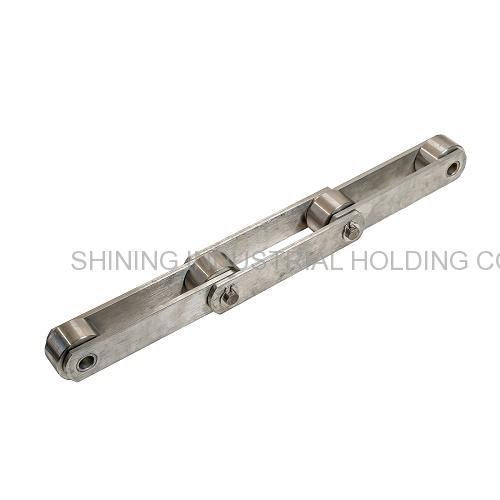


Choosing the Right Pin Connection for Maximum Conveyor Efficiency
 Feb 08, 2025|
 View:1768
Conveyor chains play an essential role in many industries. Selecting the correct pin connection method is very crucial for ensuring the durability and reliability of the whole conveyor system. How to choose the pin connection method for your conveyor chain system depends on your industry, application and working environment.
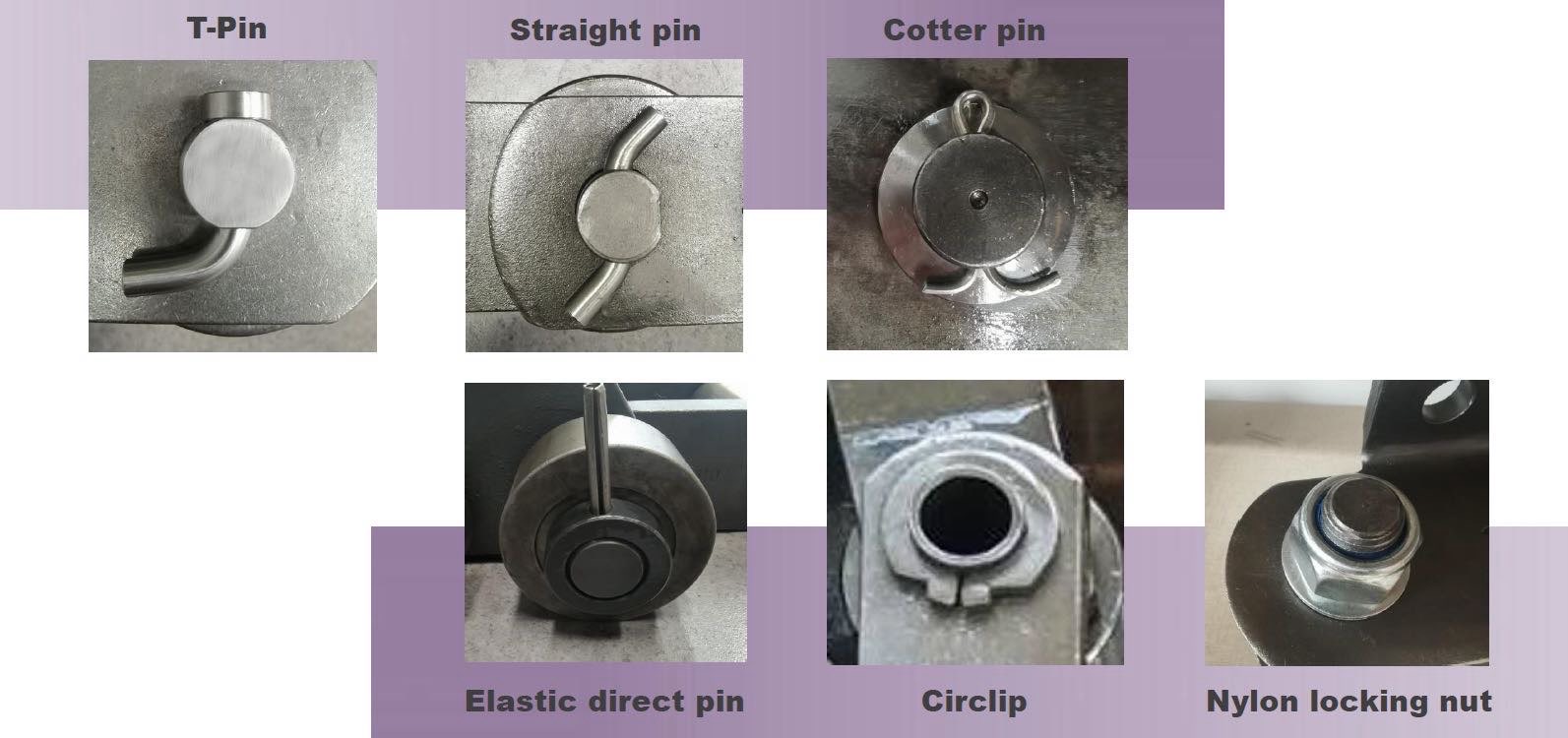
Here are some different types of pins commonly used in conveyor system, along with their unique advantages and ideal working environments:
1. T-Pin
Description: T-pin features a “T” shape with a broad head and a narrower shaft, which locks securely into place to prevent movement along the chain. It is used for secure and easy connection where the pin needs to resist axial movement.
Applications: T-pin is deal for light to medium-duty conveyor systems where quick disassembly or frequent maintenance is required.
Environment/Industry: Food processing, light manufacturing, packaging lines and industries requiring easy maintenance access.
2. Straight Pin
Description: Straight pin is a simple, cylindrical pin that is inserted through the links of the conveyor chain. It can be secured in place with clips or cotter pins.
Applications: Straight pin is often used in applications where high precision or complex pinning isn’t required and usually paired with other mechanisms like cotter pins for added security.
Environment/Industry: Basic conveyor systems in industries like light manufacturing and assembly lines.
3. Cotter Pin
Description: Cotter pin is a split pin used to lock a straight pin or another fastener in place. The pin’s prongs are bent after insertion to prevent loosening.
Applications: Cotter pin is commonly used in industries where vibration or movement might loosen a connection. They are frequently used to prevent pins from slipping out.
Environment/Industry: Heavy-duty industries such as mining, automotive and manufacturing where the conveyor system is exposed to significant vibration or harsh conditions.
4. Elastic Direct Pin
Description: Elastic direct pin combines flexibility with secure locking. It’s made from spring steel and designed to slightly flex, allowing it to absorb moderate shocks or vibrations.
Applications: It’s perfect for moderate-duty conveyor systems with moderate shock loads or vibration, where some movement is necessary but safety is still paramount.
Environment/Industry: Automotive, food processing and light machinery industries, especially where moderate shock loads are common.
5. Circlip
Description: Circlip is a circular fastener that fits into a groove on the pin to prevent axial movement. It offers easy installation and removal.
Applications: Circlip is typically used for parts where frequent maintenance or removal of the pin is necessary without compromising security.
Environment/Industry: Precision machinery, electronics and automotive industries where parts are regularly maintained or replaced.
6. Nylon Locking Nut
Description: Nylon locking nut uses a nylon insert to prevent the nut from loosening due to vibration. It provides a high level of security in fastening applications.
Applications: Nylon locking nut is commonly used in conjunction with pins to ensure secure, long-lasting connections. It’s ideal for applications where vibration could cause parts to loosen.
Environment/Industry: Automotive, mining and heavy-duty manufacturing industries where strong, reliable fastening is essential under high vibration conditions.
The choice of pin for your conveyor chain system depends on your specific application and the type of environment your machinery operates in. At SHINING, we provide high-quality conveyor chains and pins tailored to meet your unique needs. Whether you're looking for easy maintenance, enhanced security or vibration resistance, we have the right solution for you. Check our website www.shiningco.com to see more details and please contact us if you’re interested in our products.