

Cement Plant Heat Exchanger Selection: The Complete Guide
 Apr 20, 2026|
 View:1010
Introduction
In the demanding environment of a cement plant, the reliability of auxiliary systems like heat exchangers is critical for productivity and cost control. These units are vital for preheating Heavy Fuel Oil (HFO) for optimal kiln combustion and for cooling critical machinery. Choosing the correct heat exchanger is a strategic decision impacting your entire operation. This guide outlines the essential selection factors, addresses common industry questions, and explains the value of partnering with an integrated solution provider for long-term reliability.
Key Factors in Heat Exchanger Selection
Selecting the right unit starts with a precise analysis of your specific application. Avoid a one-size-fits-all approach by defining these parameters:
Application & Media: Identify the primary function. Is it for HFO Preheating (high-pressure, high-temperature) or Equipment Cooling (for gearboxes, motors, bearings)?
Thermal & Hydraulic Parameters: Provide exact data for accurate design.
- Heat Load (kW)
- Inlet/Outlet Temperatures for both fluid streams
- Flow Rates (m³/h)
- Design & Operating Pressures
- Maximum Allowable Pressure Drop
Material Selection: This is dictated by media, temperature, and pressure. Common setups include carbon steel for structural parts and stainless steel (e.g., 304/304L) for tubes in corrosive or high-temperature service.
Configuration: The two main types for cement plants are:
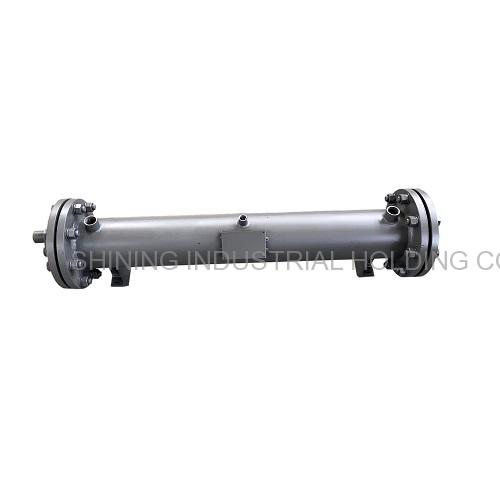
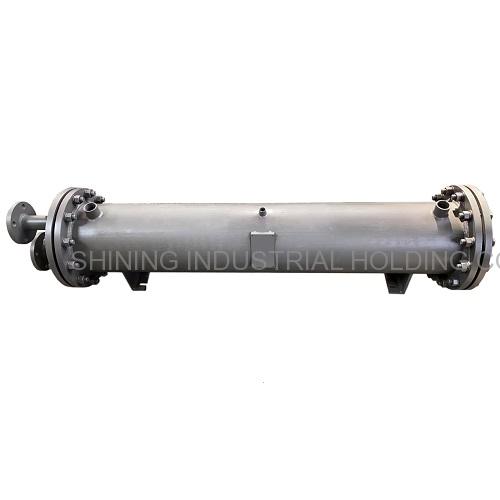
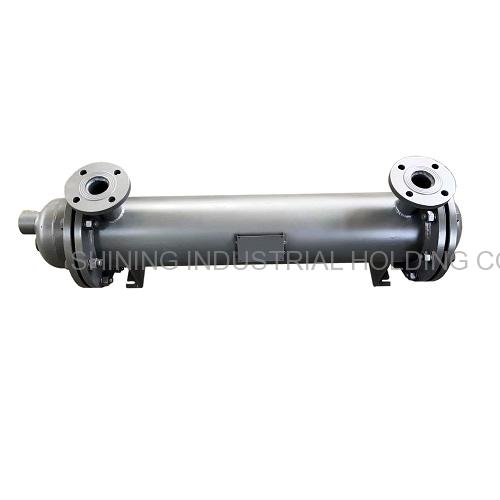
- Shell and Tube Heat Exchangers: Ideal for HFO heating and high-pressure lube oil cooling. Robust and customizable.

- Plate Heat Exchangers: Excellent for clean water-water or water-glycol cooling duties. Compact and efficient.

Material Showdown: Stainless Steel vs. Copper Tubes
The tube material significantly impacts longevity and cost. For cement plant durability, stainless steel is often the superior choice.
Feature | Stainless Steel Tubes | Copper Tubes |
Connection Method | Welded to tube sheet | Mechanically expanded |
Leak Resistance | Superior (stronger welded joint) | Prone to loosening under thermal cycling |
Wall Thickness | Thicker (e.g., 1.5-2.0 mm) | Thinner (e.g., 0.5-0.8 mm) |
Corrosion/Erosion Resistance | Excellent | Good, but thinner walls are more vulnerable |
Long-Term Performance | Stable surface, minimal scaling | Surface oxidizes ("copper green"), reducing efficiency |
Life-Cycle Cost | Lower maintenance, longer life | Higher long-term maintenance potential |
Why Choose an Integrated Solution Provider?
Partnering with a specialist who understands both industrial applications and integrated manufacturing offers distinct advantages:
Application Expertise: A provider experienced in heavy industry brings valuable insight into how auxiliary systems support core processes like kiln operation.
Simplified Procurement: A partner with access to a comprehensive manufacturing ecosystem (like the Yangtze River Delta) can act as a single point of contact, managing quality control for the entire system from core unit to ancillary components.
Full-Cycle Support: Look for a provider that offers end-to-end service: technical consultation, custom design, manufacturing, testing, global delivery, and long-term support.
Frequently Asked Questions (FAQ)
Q: What is a typical design pressure for an HFO preheater?
A: Design pressures are application-specific but are often high due to system requirements. Common shell-side design pressures for HFO units can range from 4.0 MPa to over 5.5 MPa. Always specify your system's exact operating pressure with a safety margin.
Q: Why is stainless steel often recommended over copper for cement plant coolers?
A: As shown in the comparison table, stainless steel offers a more durable welded connection, thicker walls for erosion resistance, and better long-term performance stability in challenging plant environments, leading to lower lifetime costs.
Q: What are the benefits of "one-stop" procurement for heat exchangers?
A: It simplifies your supply chain, ensures component compatibility, consolidates quality responsibility with one vendor, and often streamlines logistics and technical support, reducing project management overhead.
Conclusion: Making the Strategic Choice
Selecting a heat exchanger for your cement plant is a strategic decision that balances technical specifications, material science, and the total cost of ownership. By thoroughly defining your operational needs and understanding the critical trade-offs—such as the long-term benefits of stainless steel over copper—you lay the groundwork for a reliable solution.
The final, and equally crucial, step is choosing the right partner. This is where a provider’s deep industry expertise and integrated service model create tangible value. For instance, partnering with a specialist like SHINING, which roots its approach in industrial drive system knowledge and leverages a robust manufacturing ecosystem, transforms a component purchase into a strategic investment. Such a partnership ensures that the heat exchange solution is not just a standalone unit, but a seamlessly integrated part of your plant’s operation, backed by full-cycle support from design to long-term maintenance.
By following a rigorous selection process and aligning with a partner that offers both application understanding and supply chain simplicity, you secure more than just equipment—you invest in enhanced plant efficiency, reduced operational risk, and a solid foundation for continuous production.