

What Is a Pintle Chain and How Does It Work?
 Nov 05, 2026|
 View:2
Key Takeaways
A pintle chain is a heavy-duty conveyor chain made of cast or forged links connected by steel pins.
It moves bulk materials by engaging with a sprocket, not by roller bearing rotation like a standard roller chain.
The open-barrel design resists material buildup, making it ideal for abrasive, dirty, and high-load environments.
Common uses include agriculture, cement, mining, wastewater, grain handling, and wood processing.
Correct selection depends on pitch, tensile strength, attachment type, material, and operating conditions.
Introduction
If your operation involves moving limestone, clinker, grain, sludge, aggregate, or manure, you already know that standard chains wear out fast. The challenge is rarely "moving the material." The real problem is keeping the conveyor running under abrasion, shock load, moisture, and continuous duty. That is exactly where a pintle chain earns its place.
This guide explains what a pintle chain is, how it works mechanically, where it performs best, and how to choose the right specification. It is written for equipment buyers, plant engineers, maintenance managers, and OEM designers who need practical answers, not just definitions.
What Is a Pintle Chain?
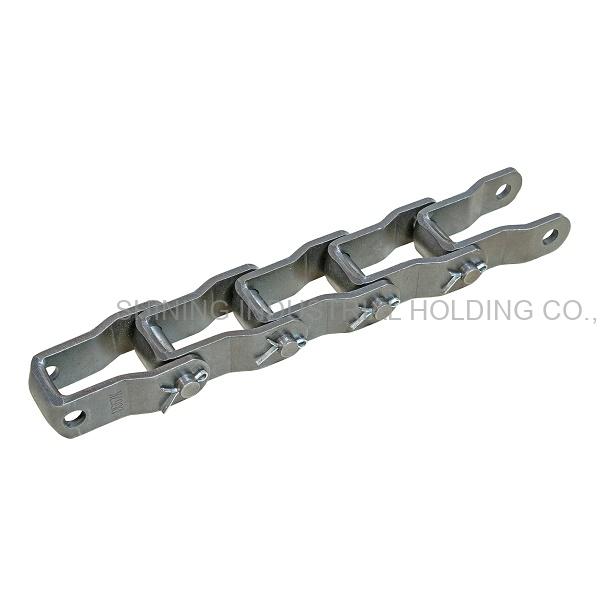
A pintle chain is a type of heavy-duty conveyor and drive chain. The word "pintle" refers to a pin or pivot. In this design, each chain link is typically a one-piece cast or forged component with a barrel and sidebar. The links are connected by a hardened steel pin, which acts as the pivot between adjacent links.
Unlike a roller chain that relies on rollers and bushings, a pintle chain uses a simpler, stronger open-joint structure. This makes it more tolerant to dirt, impact, and abrasive bulk material.
How Does a Pintle Chain Work?
The working principle is straightforward:
Sprocket engagement: The chain wraps around a driven sprocket. The sprocket teeth mesh with the chain links or pins.
Power transmission: As the sprocket rotates, it pulls the chain through the conveyor frame.
Material movement: Attachments such as flights, slats, crossbars, or buckets mounted on the chain push or carry the material.
Flexible articulation: The pins allow each link to pivot, so the chain can run around corners, over return rails, and through long conveyor paths.
Open-barrel self-cleaning: Because the joint is open, fines and debris can fall away instead of packing inside the chain.
In short, the chain converts rotational power from the drive system into linear movement for bulk material handling.
Main Components of a Pintle Chain
| Component | Function |
|---|---|
| Cast or forged link | Provides structural strength and carries the load |
| Pintle pin | Connects links and allows controlled articulation |
| Barrel / open joint | Reduces material buildup and supports smooth pivoting |
| Attachment plate | Holds flights, buckets, slats, or custom hardware |
| Heat-treated surfaces | Improve wear resistance and fatigue life |
Why Pintle Chains Are Used in Harsh Conditions
A pintle chain is not chosen for high-speed precision. It is chosen for toughness. The main advantages include:
Abrasion resistance: Suitable for sand, stone, clinker, sludge, and agricultural waste.
Shock-load capability: Handles sudden surges from bin discharge and crusher feed.
Low sensitivity to contamination: Open joints tolerate dirt better than sealed roller chains.
Long conveyor runs: Effective for en-masse conveyors and drag systems.
Customizable: Attachments, pitches, and materials can be adapted to the application.
Common Applications
Agriculture: Manure spreaders, fertilizer spreaders, hay handling, grain conveyors.
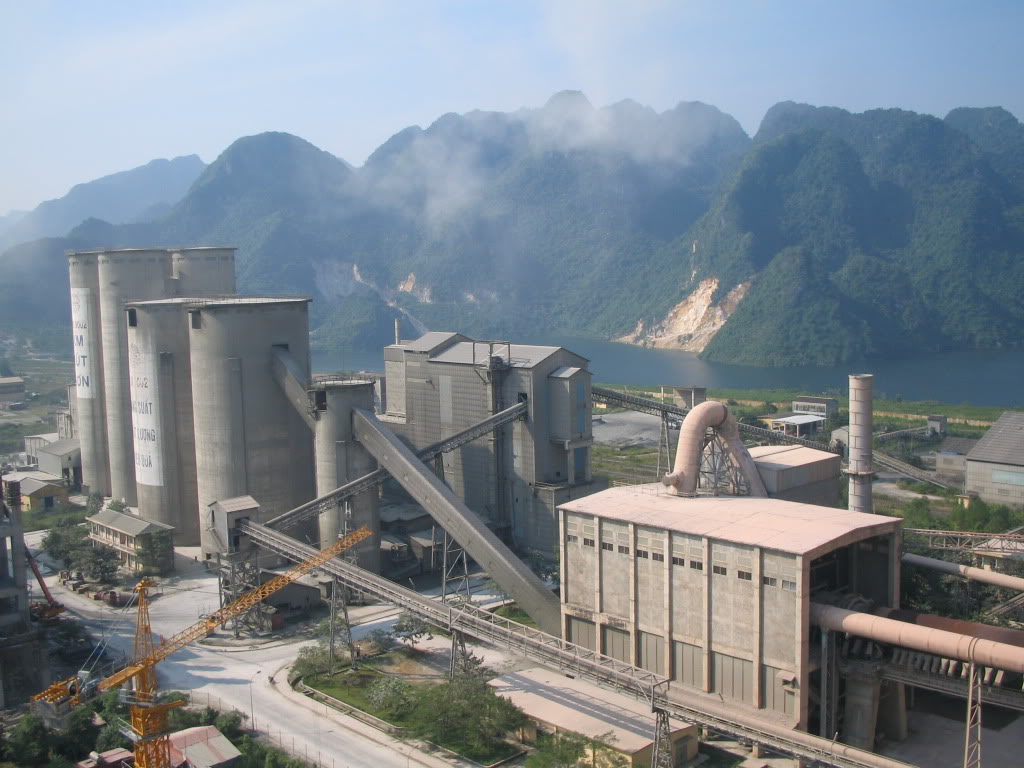
Cement plants: Raw material handling, kiln inlet conveyors, clinker cooler discharge.
Mining and quarrying: Crushed stone, aggregate reclaim, mineral drag conveyors.
Wastewater: Sludge conveyors, clarifiers, screen discharges.
Wood processing: Log decks, chip conveyors, lumber transfer systems.
Grain and milling: En-masse horizontal drag conveyors.
Understanding Pintle Chain Classes
Industry-standard pintle chains are generally grouped by class. Each class targets different loads and environments:
400-Class: Used in wastewater, light abrasive handling, and agricultural equipment.
600-Class: The most common group for conveyors, spreaders, and general material handling.
700-Class: Common in wastewater clarifiers and environmental systems.
800-Class: Heavy-duty mining, bucket elevators, and high-shock applications.
900-Class: Specialized for sugar mills and palm oil processing.
Within these classes, model numbers such as 662, 667H, 667X, 667XH, and 667K describe specific pitch, pin size, plate geometry, and strength levels.
Typical SHINING Steel Pintle Chain Options
| Model | Pitch (mm) | Min. Tensile (kN) | Avg. Tensile (kN) | Typical Use |
|---|---|---|---|---|
| 662 | 42.27 | 37.80 | 49.8 | Light-duty agriculture, compact conveyors |
| 667H | 58.75 | 42.30 | 59.3 | Moderate-load spreaders and feeders |
| 667X | 57.15 | 66.70 | 96.5 | General heavy-duty conveying |
| 667XH | 57.15 | 124.50 | 138.6 | High-shock and high-wear environments |
| 667K | 57.15 | 89.00 | 123.2 | Demanding bulk handling with heavier plates |
Specifications above reflect common SHINING steel pintle chain configurations. Final selection should be confirmed against equipment drawings and operating conditions.
How To Choose the Right Pintle Chain
Selecting the correct chain is more than matching a part number. Consider the following:
Material type: Abrasive, sticky, corrosive, hot, or free-flowing?
Load condition: Continuous duty, peak surges, or intermittent operation?
Conveyor layout: Horizontal, inclined, enclosed, or long-distance en-masse?
Speed: Pintle chains usually run at low speed with high torque.
Attachments: Flights, buckets, slats, or custom mounting plates.
Environment: Moisture, chemicals, temperature, and cleaning requirements.
Sprocket compatibility: Pitch and tooth profile must match existing equipment.
Pintle Chain vs Roller Chain
| Factor | Pintle Chain | Roller Chain |
|---|---|---|
| Best use | Bulk material handling, dirty environments | Power transmission, cleaner conditions |
| Joint design | Open barrel, pin-connected | Roller, bushing, pin assembly |
| Abrasion tolerance | High | Moderate |
| Load capacity | High shock and tensile load | High-speed, precise drive |
| Maintenance | Simple inspection and section replacement | Lubrication-critical |
Installation and Maintenance Best Practices
Confirm correct pitch, attachment position, and sprocket alignment before installation.
Avoid over-tensioning. The chain should articulate freely without excessive slack.
Inspect pins, barrels, and attachments regularly for wear or deformation.
Keep the conveyor path clear of trapped material that can overload the chain.
Use compatible lubrication where the process allows; in food or product-contact zones, sealed or low-contamination designs may be required.
Replace worn sprockets together with the chain to avoid uneven tooth wear.
For partial repairs, keep replacement links from the same manufacturing batch when possible.
Why Specifications Matter More Than Price
A cheaper chain with the wrong heat treatment or pin retention can cause unexpected shutdown. In cement, mining, and wastewater plants, downtime often costs far more than the chain itself. The better approach is to evaluate:
Link material and heat treatment
Pin retention method
Tensile and working load margin
Attachment strength
Sprocket hardness matching
Manufacturing consistency and inspection records
SHINING Pintle Chain Manufacturing Advantage
SHINING designs and manufactures steel pintle chains for demanding bulk-handling applications. With more than 20 years of conveyor chain engineering experience, SHINING provides:
In-house heat treatment for hardness, toughness, and wear resistance
Precision machining and consistent pin-hole tolerance control
Batch tensile testing and dimensional inspection
Standard models including 662, 667H, 667X, 667XH, 667K, 88K, 88C, and 308 series
Custom attachments engineered from client drawings
Application support for cement, mining, agriculture, wastewater, and grain handling
For replacement projects, SHINING can evaluate the existing chain class, pitch, attachment layout, and operating conditions to recommend a practical upgrade path.
Conclusion
A pintle chain is a simple but highly effective solution for moving tough materials in tough environments. Its open-joint design, strong links, and flexible articulation make it one of the most reliable choices for slow-speed, high-load conveying.
Whether you are maintaining a manure spreader, a cement plant drag conveyor, a mining reclaim system, or a wastewater clarifier, the right chain specification determines how long your equipment stays productive. Understand the working principle, match the class to the duty, and work with a manufacturer that controls quality from raw material to final tensile test.
FAQ
What is the difference between a pintle chain and a roller chain?
A pintle chain uses open pin-connected links for bulk handling in dirty, abrasive conditions. A roller chain uses rollers and bushings for cleaner, higher-speed power transmission.
How do I identify my pintle chain model?
Check pitch, pin diameter, plate height and thickness, inside width, and attachment position. Model markings help, but physical measurement is more reliable.
Can I replace only part of the chain?
Yes, but use the same manufacturer batch when possible. Mixed dimensions can cause uneven wear or joint failure.
Which pintle chain is best for heavy abrasion?
Higher-strength models with heat-treated links and reinforced plates, such as 667XH or 667K configurations, are commonly used for aggressive materials.
Do pintle chains need lubrication?
Some applications use dry or sealed designs to avoid product contamination. Others use approved lubricants. The choice depends on material, temperature, and hygiene requirements.
Are SHINING pintle chains interchangeable with other brands?
Dimensions may match standard classes, but pin and link tolerances can differ. For full loops, SHINING confirms sprocket compatibility before supply.
Need help specifying your chain?
Send your equipment type, material, pitch, and attachment drawing to SHINING for a technical recommendation.